LEARN ABOUT THE JEWELRY
The Sacred Stones of Mesoamerica
Jade is not a gemstone. It is a Spiritual Connection to our Ancestors.
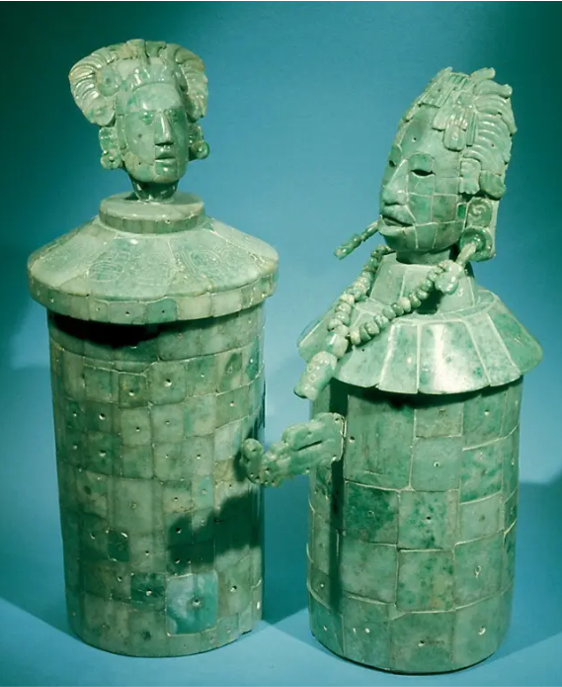
Jade — The Supreme Sacred Stone
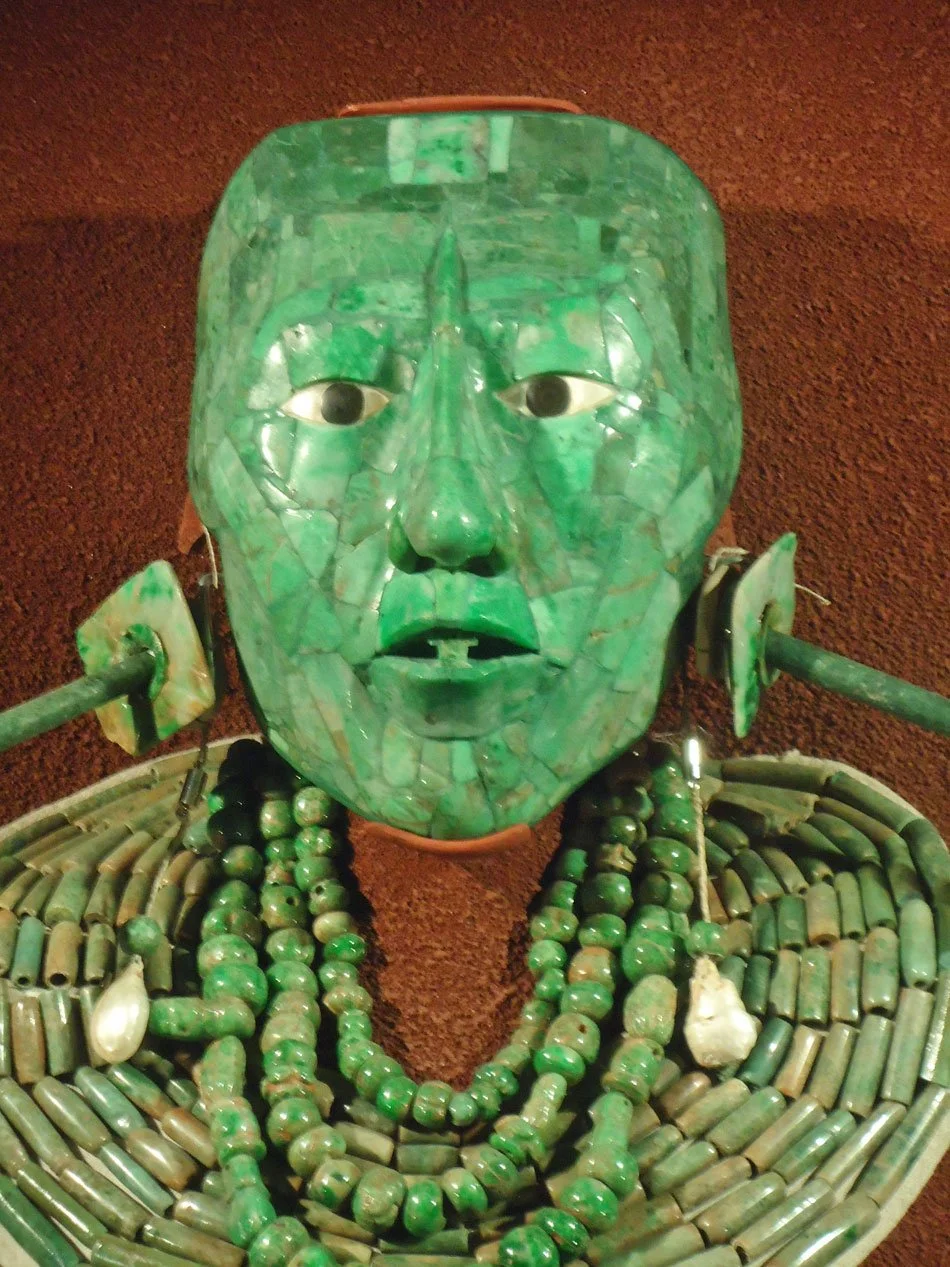
For over three thousand years, jade was the supreme sacred material across all of Mesoamerica — more revered than gold, more powerful than silver, more precious than any stone known to the ancient world. From the Olmec, the first great civilization of Mexico, to the Maya of the lowlands and highlands, to the Zapotec of Oaxaca, to the Aztec/Mexica of Tenochtitlan — every great prehispanic culture understood jade as the living embodiment of water, wind, breath, and the force of creation itself. The Aztec called it Chalchihuitl in Nahuatl — precious water-stone. In Yucatec Mayan, Ya'ax Chich Hun. Rulers wore it at their throats. Kings were buried with it pressed to their lips. Priests carried it into ceremony. Warriors wore it into battle. It was the stone of life, of rain, of the green world renewing itself after darkness.
El Jade — La Piedra Sagrada Suprema
Durante más de tres mil años, el jade fue el material sagrado supremo en toda Mesoamérica — más venerado que el oro, más poderoso que la plata, más precioso que cualquier piedra conocida en el mundo antiguo. Desde los Olmecas, la primera gran civilización de México, hasta los Mayas de las tierras bajas y altas, los Zapotecas de Oaxaca y los Aztecas/Mexicas de Tenochtitlan — cada gran cultura prehispánica entendió el jade como la encarnación viva del agua, el viento, el aliento y la fuerza de la creación misma. Los Aztecas lo llamaban Chalchihuitl en náhuatl — piedra de agua preciosa. En Maya Yucateco, Ya'ax Chich Hun. Los gobernantes lo llevaban en la garganta. Los reyes eran enterrados con él en los labios. Los sacerdotes lo portaban en la ceremonia. Los guerreros lo llevaban a la batalla. Era la piedra de la vida, de la lluvia, del mundo verde renovándose después de la oscuridad.
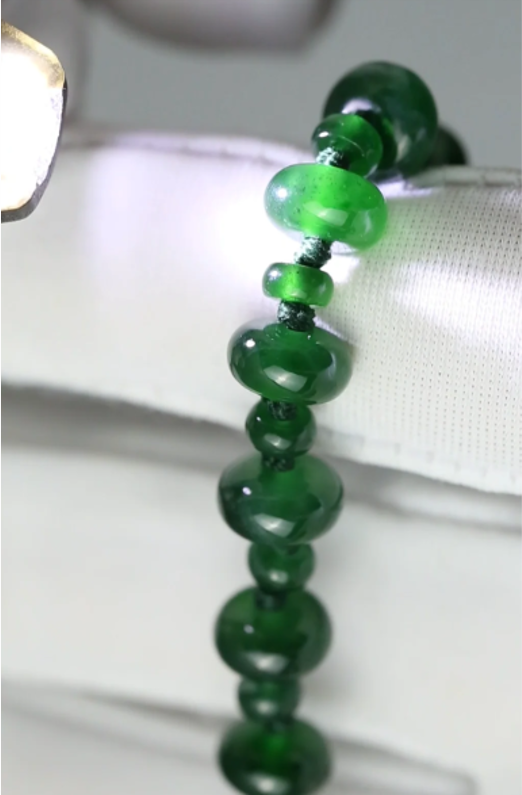
Jade and the Ocean — Philosophy in Stone
One of jade's many philosophical representations is that of the Ocean itself — from the gentleness of a mild rain to the torment of a powerful hurricane, Hurucan in Mayan. The abundance of the sea. Its fertility, its tranquility, and its power. Its color also represented by the rich emerald green of the sacred Quetzal bird's feathers, worn on the headdresses of men with high social status — primarily the Great Speaker, the Tlatoani in Nahuatl — representing the Justice and Equality required to guide and speak for the people. An ancient society entering an Era of Enlightenment, years before history would bring brutal change.
El Jade y el Océano - Filosofía en Piedra
Una de las muchas representaciones filosóficas del jade es la del Océano mismo — desde la suavidad de una lluvia leve hasta el tormento de un poderoso huracán, Hurucan en Maya. La abundancia del mar. Su fertilidad, su tranquilidad y su poder. Su color también representado por el rico verde esmeralda de las plumas del sagrado pájaro Quetzal, usadas en los tocados de hombres con alto estatus social — principalmente el Gran Orador, el Tlatoani en náhuatl — representando la Justicia y la Igualdad necesarias para guiar y hablar por el pueblo. Una sociedad antigua entrando en una Era de Iluminación, años antes de que la historia trajera un cambio brutal.
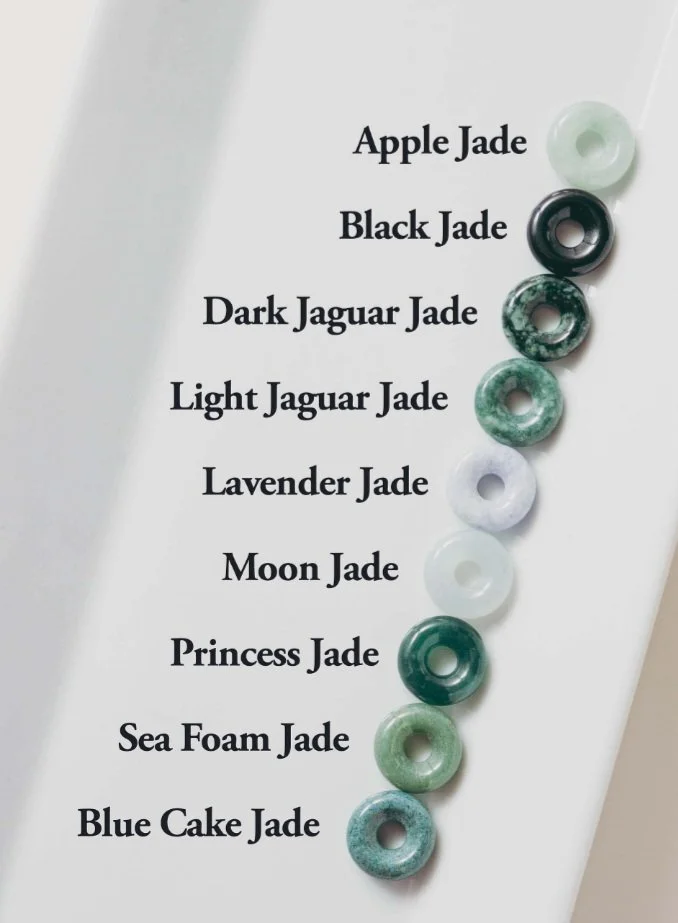
The Colors of Jade
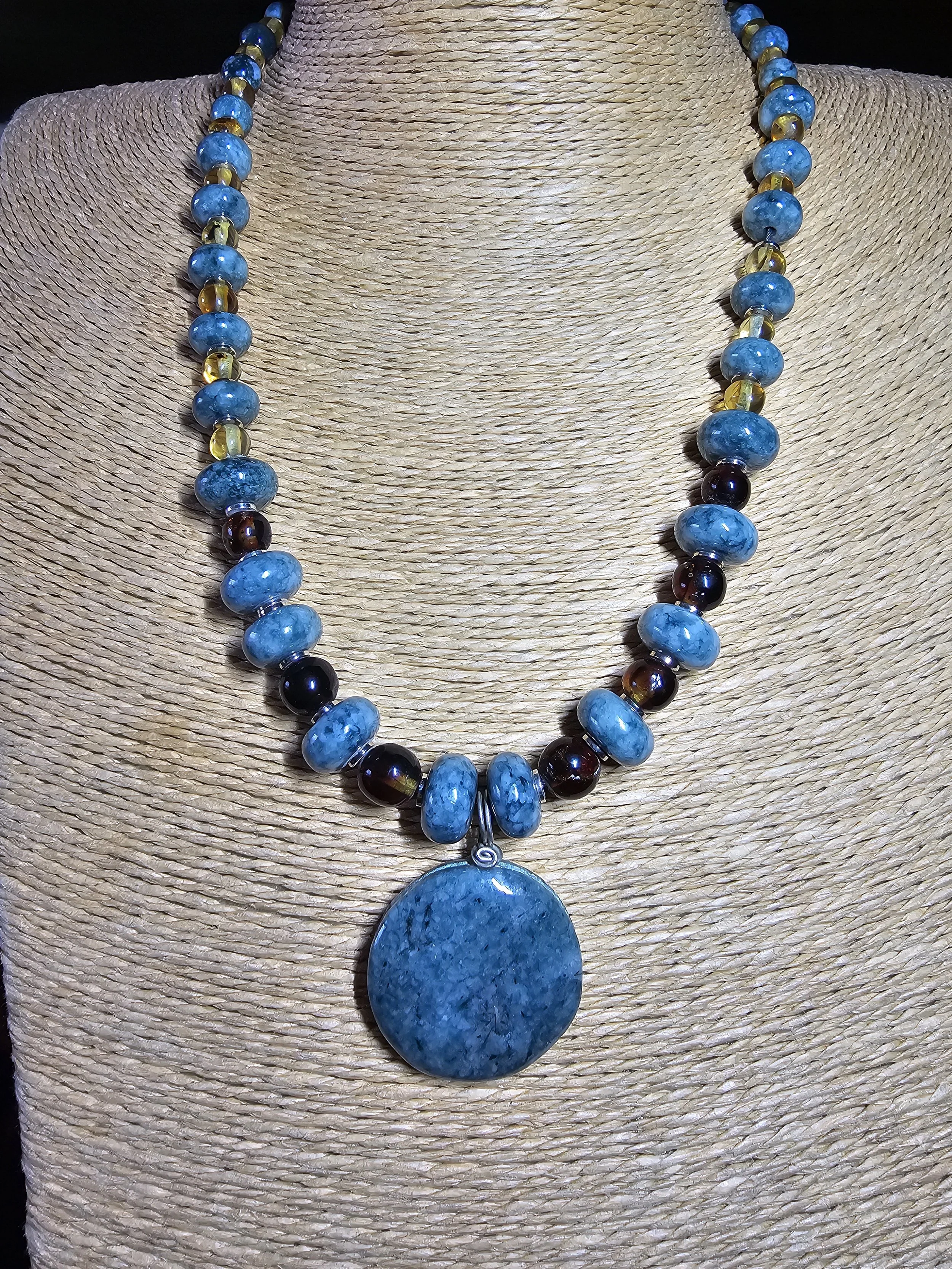
What most people don't know is that jade is not one color. Jade comes in nearly 25 to over 30 distinct varieties — from the deep imperial greens most people recognize, to translucent blues, lavenders, blacks, oranges, reds, whites, and the rarest of all, Princess Blue. There is Emerald Jade, as dark and rich as the Quetzal's feathers. Jaguar Jade, speckled with light and dark, representing the jaguar and the night. Imperial Jade — the lightest, blue-green, semi-translucent crown of the jade color spectrum. Each variety carries its own energy, its own rarity, its own story. The jade in our collection is hand-selected from the Guatemalan highlands — the only source of jade in all of Mesoamerica, the same ancient deposits that supplied the great civilizations for millennia.
Jade also absorbs negative energy — protecting the wearer from the energy-draining intentions and ill thoughts of others.
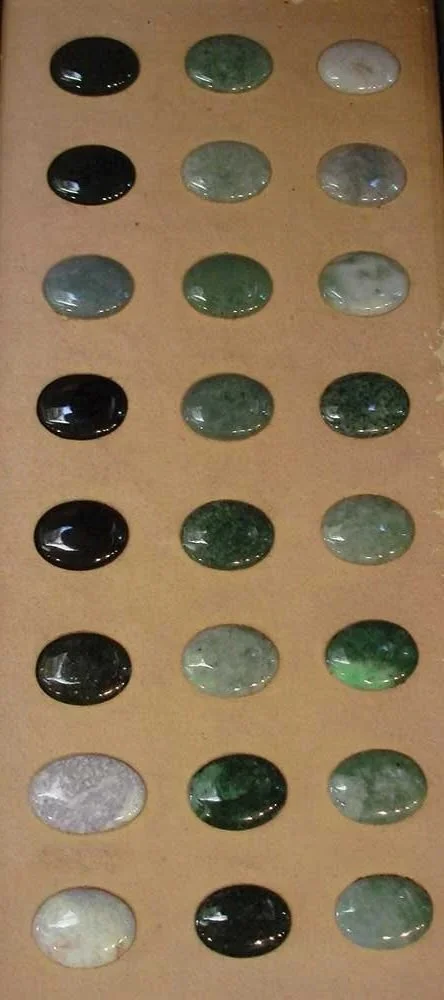
Los Colores del Jade
Lo que la mayoría de la gente no sabe es que el jade no es de un solo color. El jade existe en casi 25 a más de 30 variedades distintas — desde los verdes imperiales profundos que la mayoría reconoce, hasta azules translúcidos, lavandas, negros, anaranjados, rojos, blancos y el más raro de todos, el Azul Princesa. Está el Jade Esmeralda, tan oscuro y rico como las plumas del Quetzal. El Jade Jaguar, moteado de luz y oscuridad, representando al jaguar y la noche. El Jade Imperial — el más claro, azul-verde, semi-translúcido, corona del espectro de colores del jade. Cada variedad lleva su propia energía, su propia rareza, su propia historia. El jade de nuestra colección es seleccionado a mano en las tierras altas de Guatemala — la única fuente de jade en toda Mesoamérica, los mismos depósitos antiguos que abastecieron a las grandes civilizaciones durante milenios.
El jade también absorbe la energía negativa — protegiendo al portador de las intenciones agotadoras y pensamientos negativos de otros.
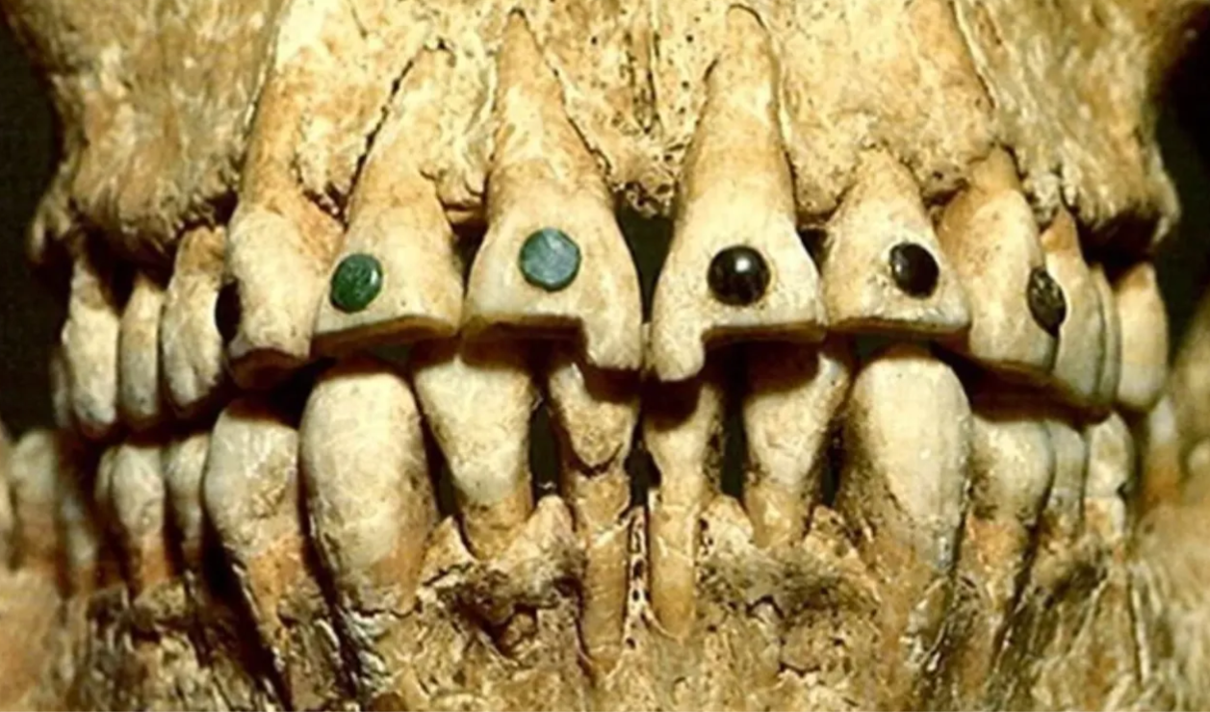
Sacred Stone in the Body - Dental Incrustations
These sacred stones were not only worn around the neck or wrist. Across Prehispanic Mesoamerica — from the Olmec to the Maya to the Zapotec to the Aztec — jade, turquoise, pyrite, and hematite were precision-drilled and inlaid directly into the teeth of the living. This was not mere decoration. It was a profound statement of spiritual identity, beauty, and cosmic status. To carry sacred stone inside your body was to become sacred stone. The practice has been found across centuries and cultures, from the earliest Olmec sites to the great cities of the Aztec civilization— proof that the relationship between human beings and these stones ran deeper than adornment. It ran to the bone.
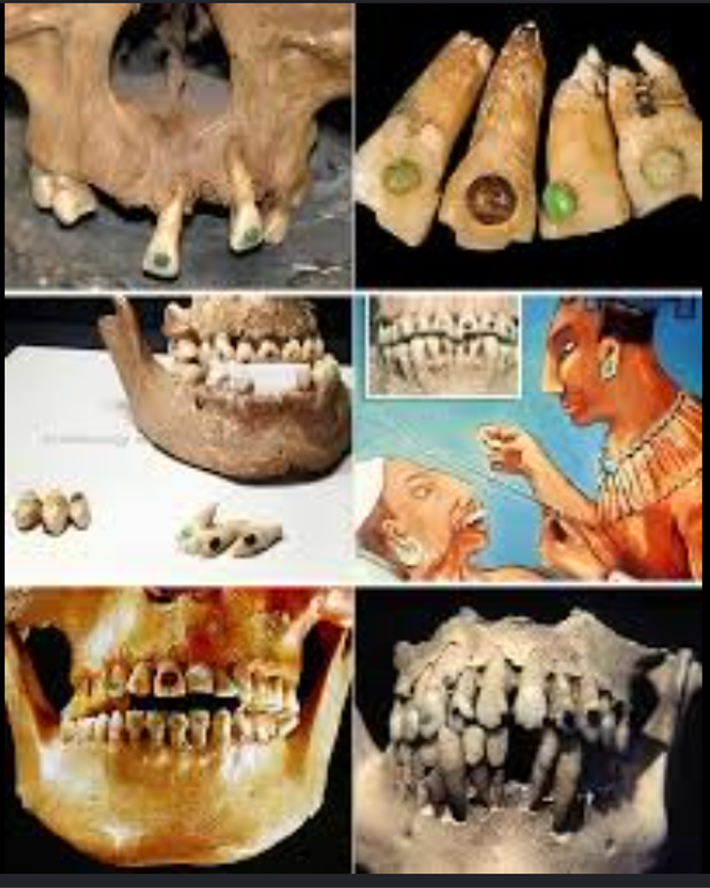
La Piedra Sagrada en el Cuerpo — Incrustaciones Dentales
Estas piedras sagradas no solo se usaban en el cuello o la muñeca. En toda Mesoamérica Prehispánica — desde los Olmecas hasta los Mayas, los Zapotecas y los Aztecas — el jade, la turquesa, la pirita y la hematita se perforaban con precisión e incrustaban directamente en los dientes de los vivos. Esto no era simple decoración. Era una declaración profunda de identidad espiritual, belleza y estatus cósmico. Llevar piedra sagrada dentro de tu cuerpo era convertirte en piedra sagrada. La práctica se ha encontrado a través de siglos y culturas, desde los primeros sitios Olmecas hasta las grandes ciudades del civilizacion Azteca — prueba de que la relación entre los seres humanos y estas piedras era más profunda que el adorno. Llegaba hasta el hueso.
Amber — The Sun Made Stone
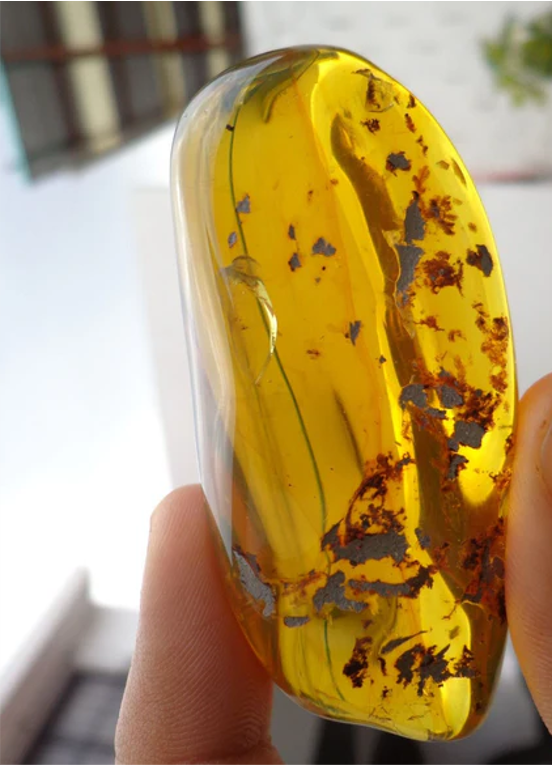
Amber tells an equally profound story. Sacred across all Prehispanic cultures, the amber in our collection comes from Simojovel, Chiapas — the most celebrated amber source in all of Mexico, where golden, cognac, red, and the rarest blue and green ambers have been mined since ancient times. Mexican amber is from the Oligocene -Miocene age some 24-30 million years ago.
In every Mesoamerican tradition, amber was worn by healers as protection, and carried as a guide through the unseen world. Amber absorbs negative energy and transforms it into positive force — a living stone, warm to the touch, ancient in its memory.
Ámbar - La Piedra Creada por el Sol
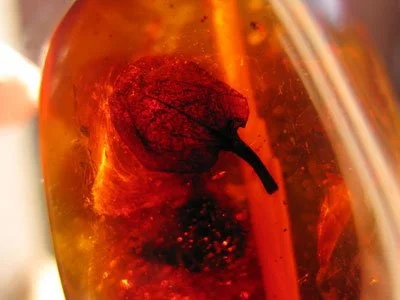
El ámbar cuenta una historia igualmente profunda. Sagrado en todas las culturas Prehispánicas, el ámbar de nuestra colección proviene de Simojovel, Chiapas, la fuente de ámbar más célebre de todo México, donde se han extraído ámbares dorados, coñac, rojos y los más raros azules y verdes desde la antigüedad. El ámbar Mexicano data del Oligoceno-Mioceno, hace entre 24 y 30 millones de años.
En todas las tradiciones mesoamericanas, el ámbar era usado por los curanderos como protección y llevado consigo como guía a través del mundo invisible. El ámbar absorbe la energía negativa y la transforma en fuerza positiva: una piedra viva, cálida al tacto, con una memoria ancestral.
Obsidian : The Smoking Mirror
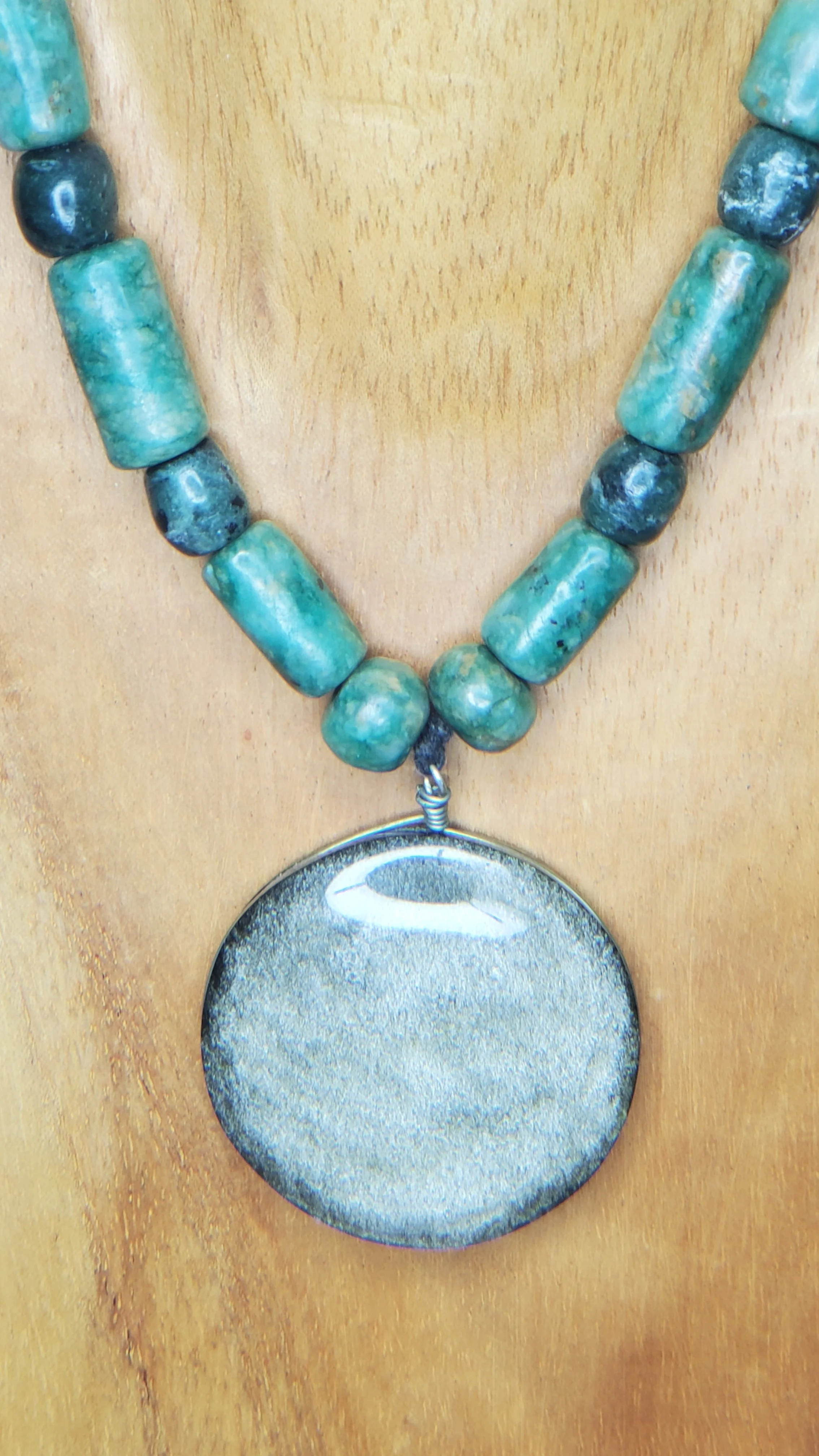
Obsidian — the volcanic glass at the heart of Aztec sacred life — was the stone of Tezcatlipoca, the Smoking Mirror, Guardian of the night sky and hidden forces. Polished obsidian mirrors allowed priests to see beyond the visible world. Worn as jewelry, obsidian reflects negative energy back to its source, standing as a guardian between the wearer and harm.
There are over 25 different types of Obsidian. From mahogany, snowflake, silver, gold, green sheen, & rainbow. Silver sheen obsidian represents the Moon, while gold sheen obsidian represents the sun. A single stone with a sacred duality. That reflects light into your soul.
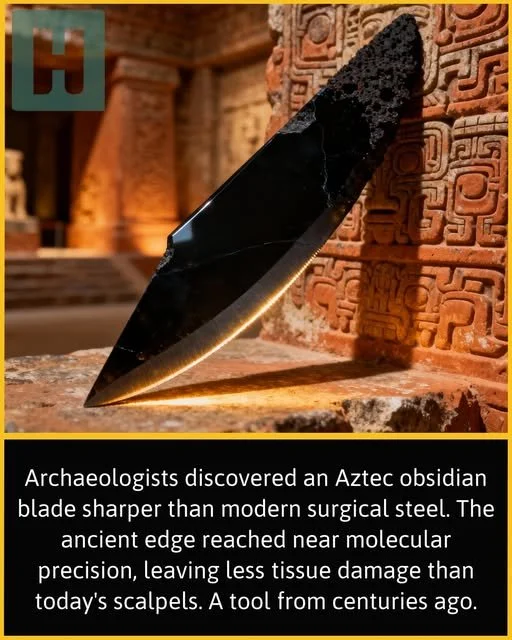
Obsidian was not only sacred — it was the most technologically advanced material in the ancient world. Volcanic glass fractures with an edge so fine it surpasses surgical steel. Modern surgeons have studied obsidian scalpels and found that obsidian blades cut at the cellular level with less tissue damage than metal. The ancient Aztec and Maya knew this thousands of years before modern medicine.
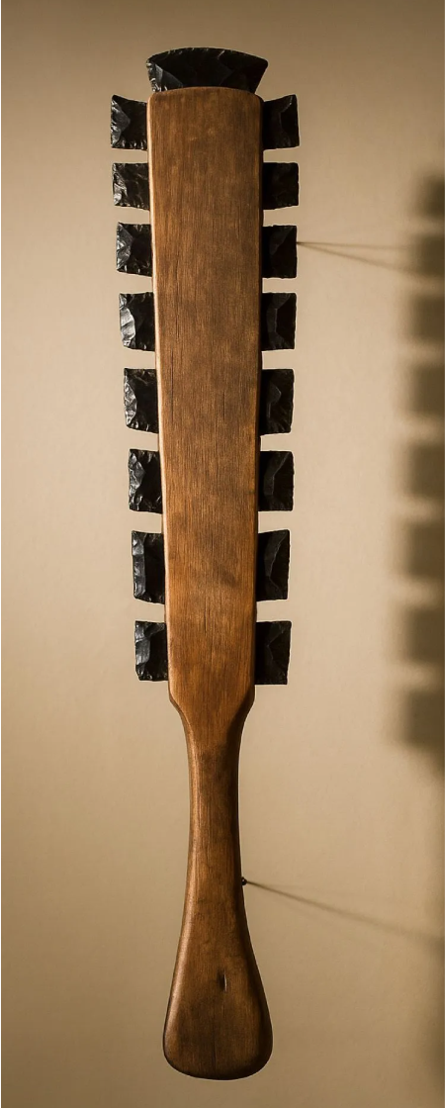
Obsidian was used in surgery, in ritual bloodletting ceremonies that connected the living to the divine, and as the razor-sharp edge of the Macuahuitl — the legendary Aztec war club embedded with obsidian blades that would decapitate a horse in a single blow. It was the weapon of warriors, the tool of healers, and the mirror of priests — the same stone serving war, medicine, and the sacred simultaneously. No other material in human history has held that trinity of power.
Obsidiana: El Espejo Humeante
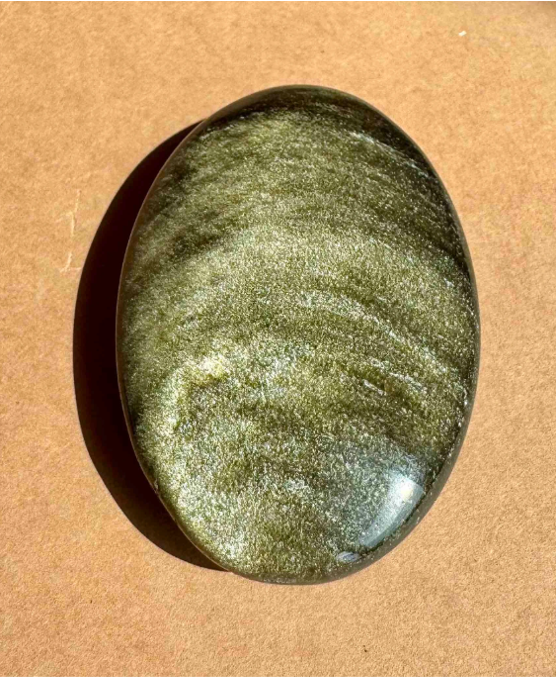
La obsidiana, el vidrio volcánico que era fundamental en la vida sagrada Azteca, era la piedra de Tezcatlipoca, el Espejo Humeante, guardián del cielo nocturno y de las fuerzas ocultas. Los espejos de obsidiana pulida permitían a los sacerdotes ver más allá del mundo visible. Usada como joya, la obsidiana refleja la energía negativa de vuelta a su origen, actuando como protectora entre quien la lleva y el daño.
Existen más de 25 tipos diferentes de obsidiana: caoba, copo de nieve, plata, oro, brillo verde y arcoíris. La obsidiana de brillo plateado representa la Luna, mientras que la de brillo dorado representa el Sol. Una sola piedra con una dualidad sagrada que refleja luz en el alma.
La obsidiana no solo era sagrada, sino que también era el material tecnológicamente más avanzado del mundo antiguo. El vidrio volcánico se fractura con un filo tan fino que supera al acero quirúrgico. Cirujanos modernos han estudiado bisturíes de obsidiana y han descubierto que las hojas de obsidiana cortan a nivel celular con menos daño tisular que las de metal. Los antiguos Aztecas y Mayas lo sabían miles de años antes de la medicina moderna.
La obsidiana se utilizaba en cirugía, en ceremonias rituales de sangría que conectaban a los vivos con lo divino, y como el filo afilado del Macuahuitl, la legendaria maza de guerra Azteca con hojas de obsidiana incrustadas que decapitaba a un caballo de un solo golpe. Era el arma de los guerreros, la herramienta de los sanadores y el espejo de los sacerdotes: la misma piedra al servicio de la guerra, la medicina y lo sagrado simultáneamente. Ningún otro material en la historia de la humanidad ha poseído esa trinidad de poder.
Turquoise — The Celestial Stone
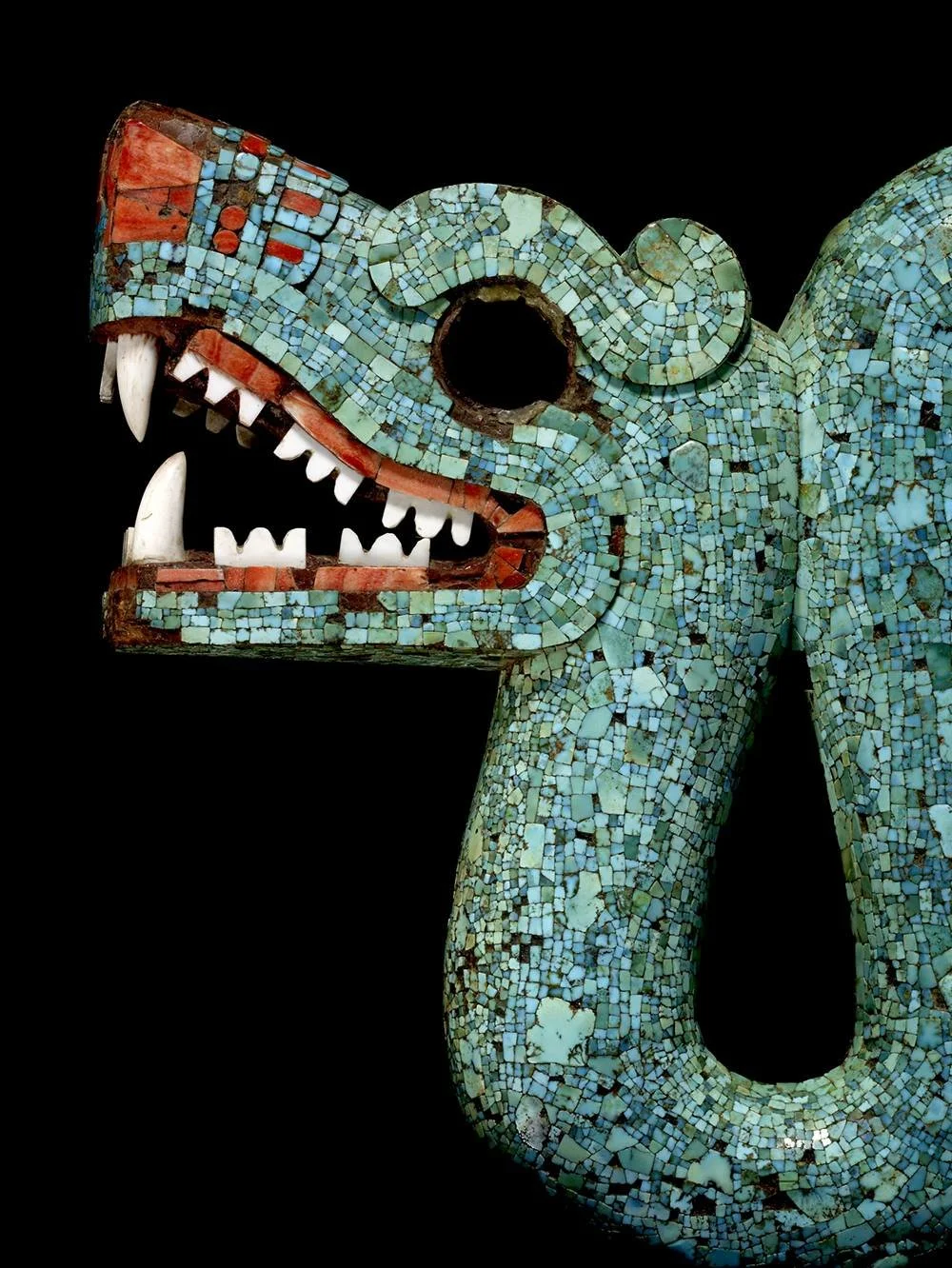
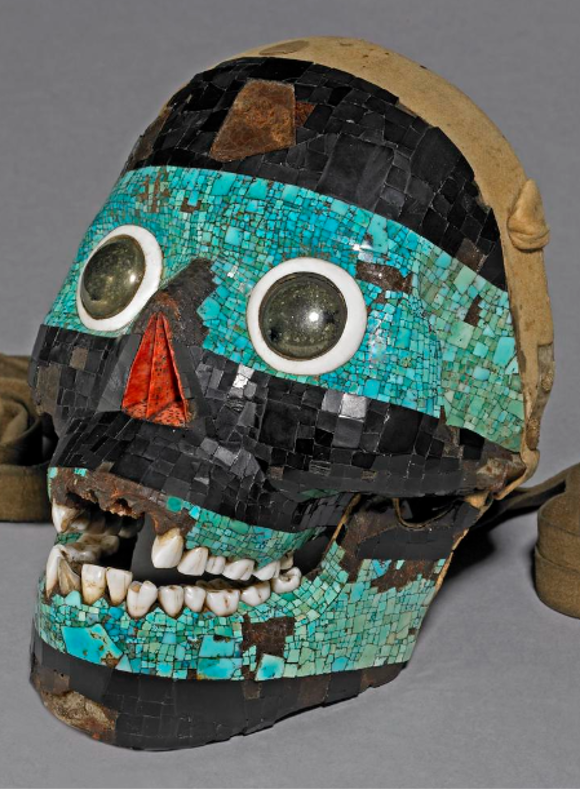
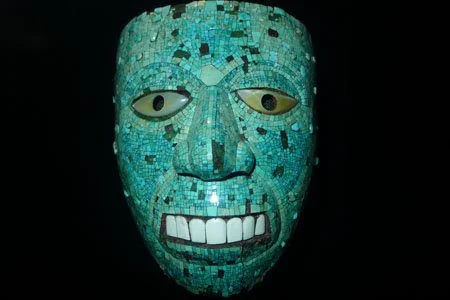
Turquoise was equally revered. The Aztec called it xihuitl— the same word they used for the year, for the comet, and for anything precious and celestial. Turquoise mosaics covered the sacred masks of guardians and kings. It was traded across thousands of miles, from the American Southwest to the heart of the Aztec civilization, appearing in the most sacred offerings ever excavated at the Templo Mayor in Tenochtitlan. Its blue-green color connected it to jade, to water, to the sky, and to divine authority.
La Turquesa — La Piedra Celestial
La turquesa era igualmente venerada. Los Aztecas la llamaban xihuitl— la misma palabra que usaban para el año, el cometa y todo lo que era precioso y celestial. Los mosaicos de turquesa cubrían las máscaras sagradas de guardianes y reyes. Era comerciada a través de miles de kilómetros, desde el suroeste americano hasta el corazón del civilizaciion Azteca, apareciendo en las ofrendas más sagradas jamás excavadas en el Templo Mayor de Tenochtitlan. Su color azul-verde la conectaba con el jade, el agua, el cielo y la autoridad divina.
OUR JEWELRY IS OUR CULTURE THAT WE WEAR
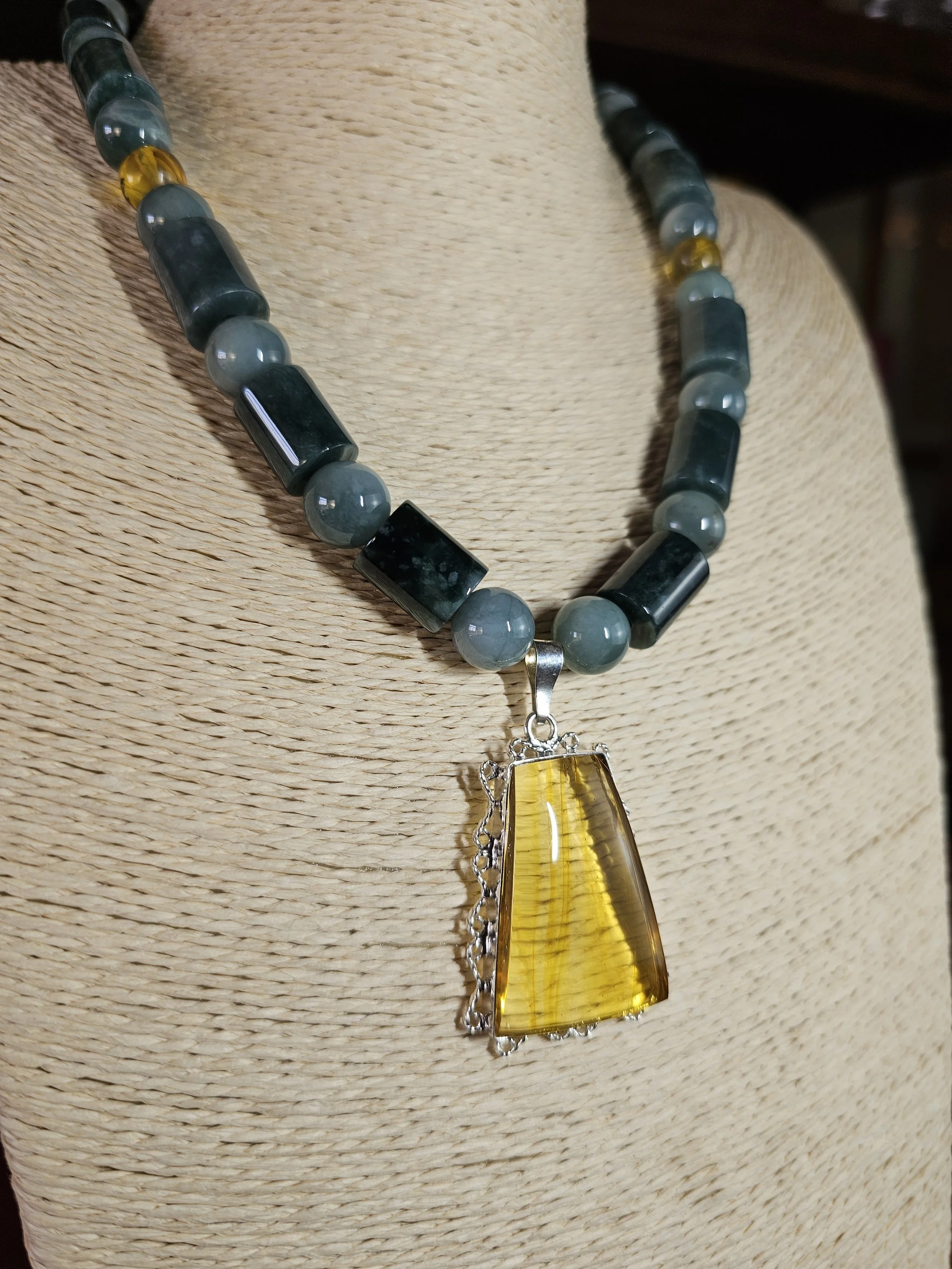
Each piece in our collection pairs these sacred stones — jade, amber, obsidian, turquoise, shell — set in pure silver by artisan hands. No two pieces are alike. No piece will ever be made again.
When a piece sells, it is gone. There is no reorder. No duplicate. These are living artifacts — stones that carry the memory of ancient civilizations and the energy of the earth itself.
Wear something that means something.
NUESTRA JOYERIA ES NUESTRA CULTURA QUE PONEMOS
Cada pieza de nuestra colección combina estas piedras sagradas —jade, ámbar, obsidiana, turquesa, concha — engastadas en plata pura por artesanos. No hay dos piezas iguales. Ninguna pieza se volverá a fabricar.
Cuando una pieza se vende, se agota. No hay reposición. No hay duplicados. Son objetos vivos: piedras que portan la memoria de civilizaciones antiguas y la energía de la tierra misma.
Lleva algo con significado.